
Author Archives: bjdueholm

Achieving and Accepting
And it’s funny—it seems that no one can think about these words for more than a few minutes without turning them into a problem that has to be solved. What did Jesus mean? Was he referring to the meal his disciples shared, the sacrament of bread and wine? Or was he talking about eating and drinking as a metaphor for believing in him?

Hard Teachings
So Jesus lets you say no—to him and to each other. He invites his disciples to leave. He does this without blame or resentment. He doesn’t call out after the people who are leaving, “You’ll be sorry!” And if the twelve had walked away discouraged, he would have found new disciples. He would have raised up a body for himself in the world somehow. He will find a way to share his eternal life with this hungry, bleeding, sinful world. Someone, somehow, will answer.

They Abide in Me, and I in Them
It’s an amazing thought to me, after so many Sundays and festivals of watching or making it happen:
God and humanity are joined in Jesus Christ;
Jesus Christ is joined to the bread and wine;
and then when we eat the bread and drink the wine, Jesus Christ is joined to us.
God comes down to earth, and we are lifted up to heaven.
God stoops to enter under our roof, and we are raised up to our full stature in the vast temple of God’s kingdom.
All so that we would not be left without comfort. So that we would not be left to worship an absent Christ.

Bread of Life
Now when a crowd shows up in ancient literature, it usually stands for human nature at its most basic and unimproved. The crowd is not very smart. The crowd is not very patient. The crowd is not very reasonable. The crowd is prone to fear. The crowd is fickle and impulsive. The crowd is like a child: when it hasn’t had a good night’s sleep and something to eat, it can become difficult.
Actions and Words
This principle–God’s words are actions, God’s actions are words–is something I try to keep in mind whenever I read a miracle story in the Bible. Because the fact is that miracle stories can seem very disappointing after you get used to them. The people who are healed and fed in the Bible just remind me, at least, of those people ever since and even today who are not healed and not fed. Where’s the miracle for them?
The Unwalled City
Think about what that means for a moment. Paul is saying that Christ has broken down the defenses, the protections, that divided Jew from Gentile, nation from nation. This is no cheap metaphor. A city without a wall, or a Temple without a wall, was vulnerable. It was naked. Yet Paul here is saying that what has happened in Christ Jesus and in the preaching of his Gospel has broken down the wall that kept Jew and Gentile in hostility to each other. The people who share in the gifts of his body and blood and who receive his triumph over sin and death by faith, those people are no longer divided into insiders and outsiders, into the safe and the abandoned, into the privileged and the excluded.
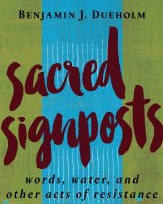
Publication Day
I collect these comments for my own benefit as much as to persuade anyone else to buy and/or read my book (though you should–it’s good and I’m proud of it). Being a writer without any formal credentials, institutional affiliation, or prominent personal platform is a disorienting vocation. I’ve taken every opportunity that’s been given me by friends and colleagues, worked up a few of my own, and relied a great deal on friends for advice and counsel. But I’ve never been very intentional about any of it. Part of the reason I started this site was to pull together pieces that sprawl across the internet like sheep without a shepherd. For ten years (not counting the years of pointlessly prolific blogging before that) I’ve been sending them out and seeing what happens to them before moving on to the next story, review, exegetical essay, or argument.

The Many Faces of Mr. Ripley
But these murder novels are different inasmuch as the murders are all somehow about something. Something that real-life murders are almost never about. Tom Ripley and Richard Papen are interlopers in more leisured classes than their own, and most readers probably know what that’s like. It can prompt envy, certainly, but also the insight that one knows things that they don’t know, that there are skills they’ve never had to develop.
Review: Sacred Signposts
Originally posted on The Anarchy of the Ranters:
Cover of Sacred Signposts by Benjamin J. Dueholm THOMASINA: Oh, Septimus! — can you bear it? All the lost plays of the Athenians! Two hundred at least by Aeschylus, Sophocles, Euripides — thousands of poems — Aristotle’s own library…. How can we sleep for grief? SEPTIMUS: By…
My Conversation with Metropolitan Nathanael
It’s important not to expect the wrong things from a Q and A between some guy and the shiny new bishop, so if some questions or demurrals go unanswered, I hope you’ll be indulgent. But we were able to have a friendly and serious conversation about topics facing his community and the church writ large: bioethics, racism, the place of churches in society.

 Brutally Ordinary Things